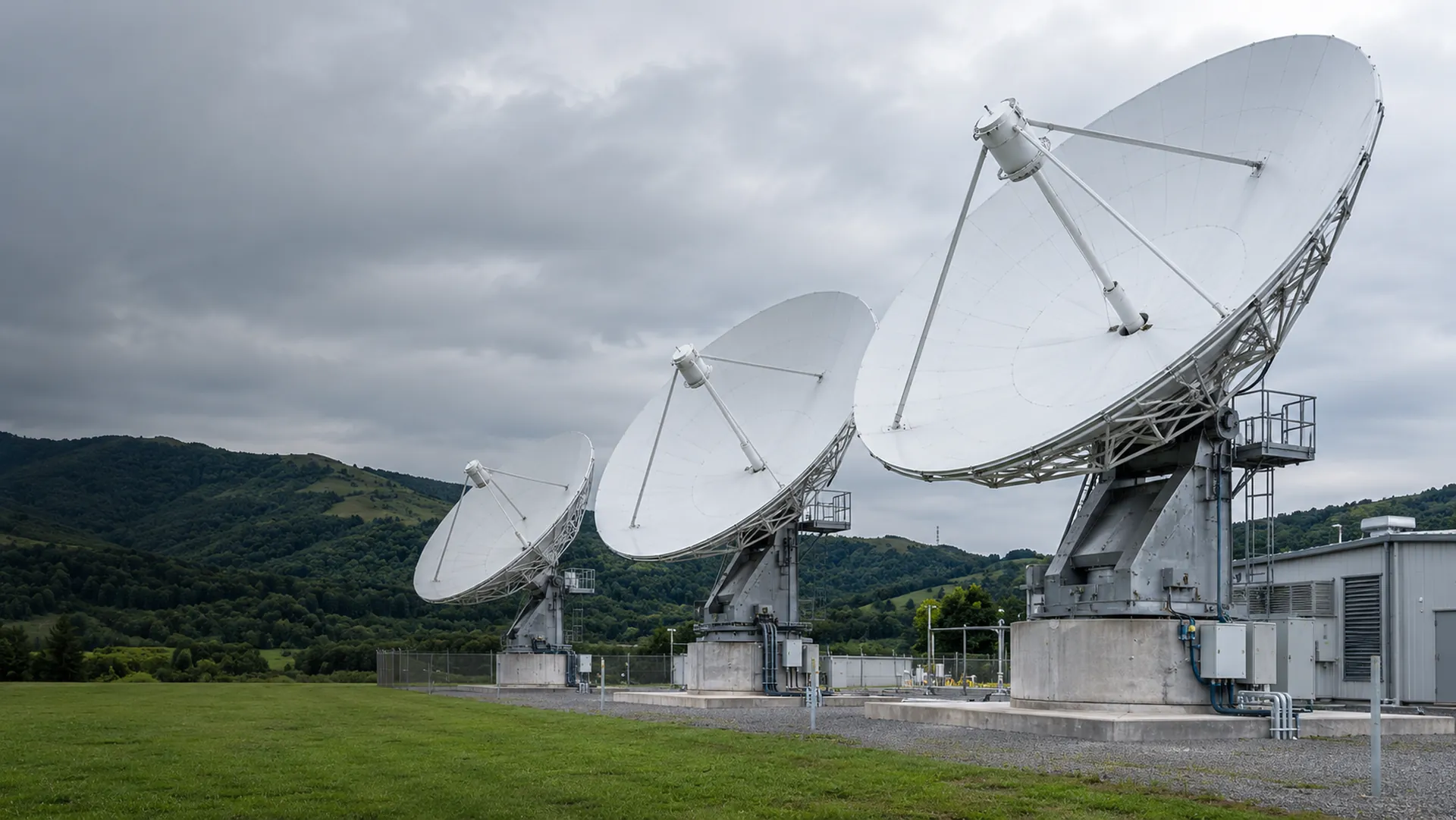
Remote monitoring and control of 80 Ka and Ku band satellite antennas

80 Ka and Ku band antennas across several sites, monitored and controlled from one Mosaic system: site diversity switching, every uplink chain with live power readings, and remote control without a site visit.

Antennas
80
Bands
Ka and Ku
Platform
Mosaic

Project overview

The client runs 80 Ka and Ku band antennas across several sites to carry its television signals. Monitoring and control were manual and spread across those sites, so checking a fade or changing an amplifier setting meant a call or a trip.

Issues faced by the client

Manual monitoring and control
Antennas and uplink chains were checked site by site.
Distributed sites
A fault at a remote site meant sending someone to find out what it was.
Real-time monitoring
Fade at one site had to be spotted before the diverse antenna could take over.
Scalability
New antennas had to join without a new control system each time.

The solution: Mosaic

Mosaic monitors and controls equipment from any vendor through one driver layer, so every antenna, converter and amplifier could sit in one system.
The current product: Mosaic global teleport operations, with demo data

How it is built

Centralized control
One hub consolidates data from every antenna, with one interface for monitoring and control.
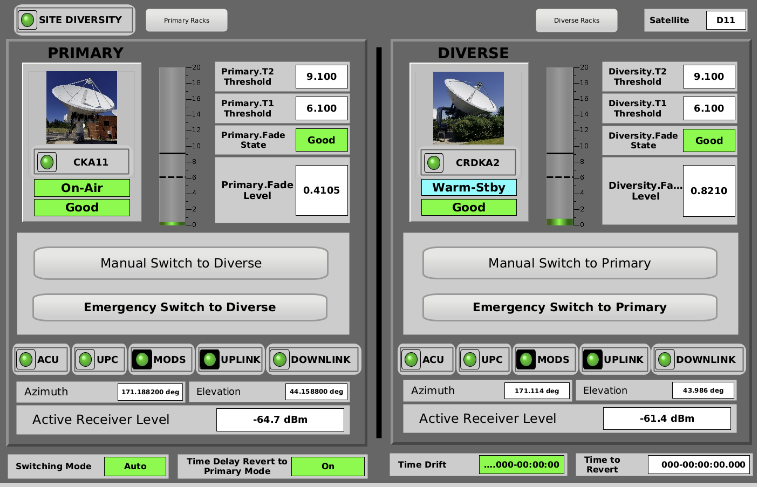
Site diversity
Primary and diverse antennas side by side, with fade levels and switching.
No-code orchestration
Rules and schedules respond to alarms without an operator, and the client's engineers set them up and change them without writing code or waiting on us.
Scalable infrastructure
New devices and sites can be added as the network grows.

Implementation

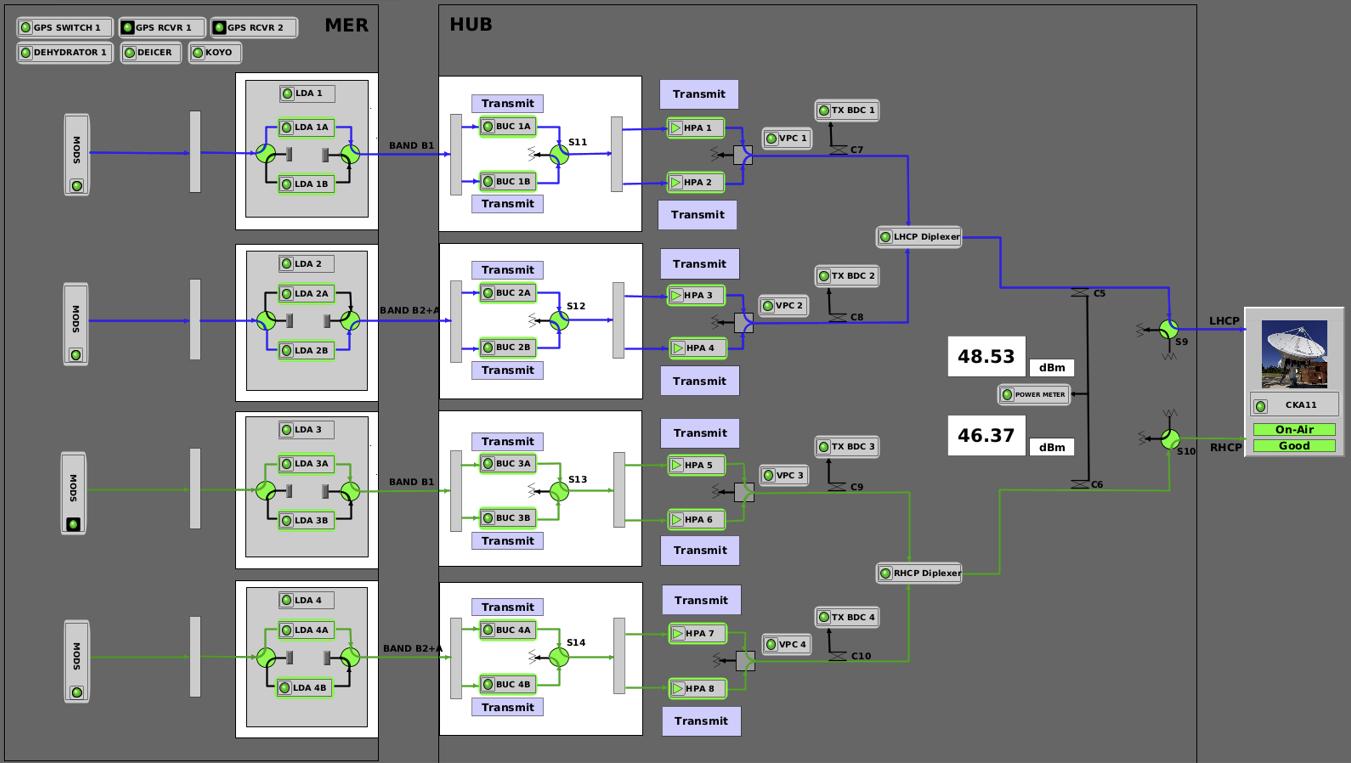
Every uplink chain, from modem to antenna, is on screen with live state and power readings, and technicians change attenuation, amplifier standby and RF settings remotely.

Alerts
All 80 antennas are monitored continuously, with real-time alerts for anomalies.
Maintenance planning
Analytics on readings kept over time help plan maintenance schedules, reducing downtime and preventing failures.
Remote control
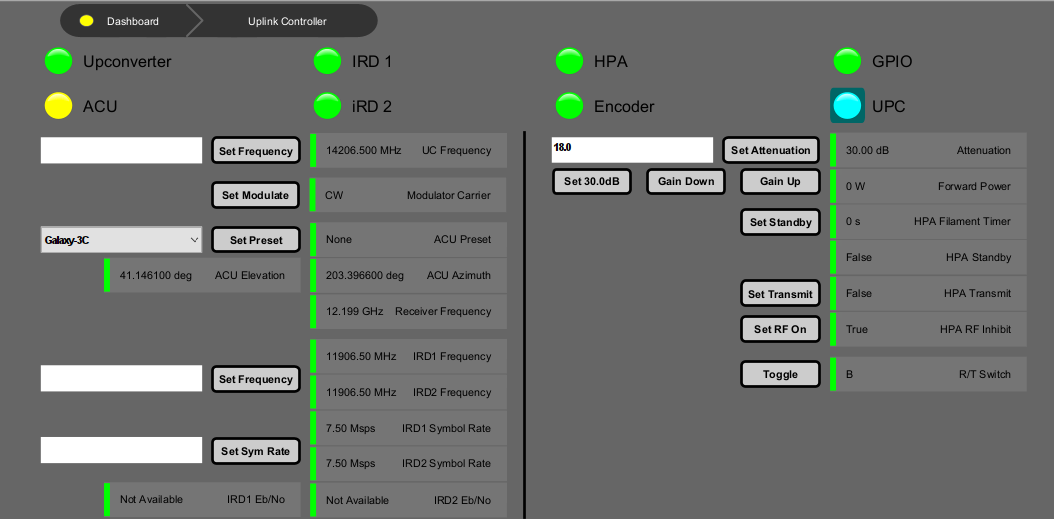
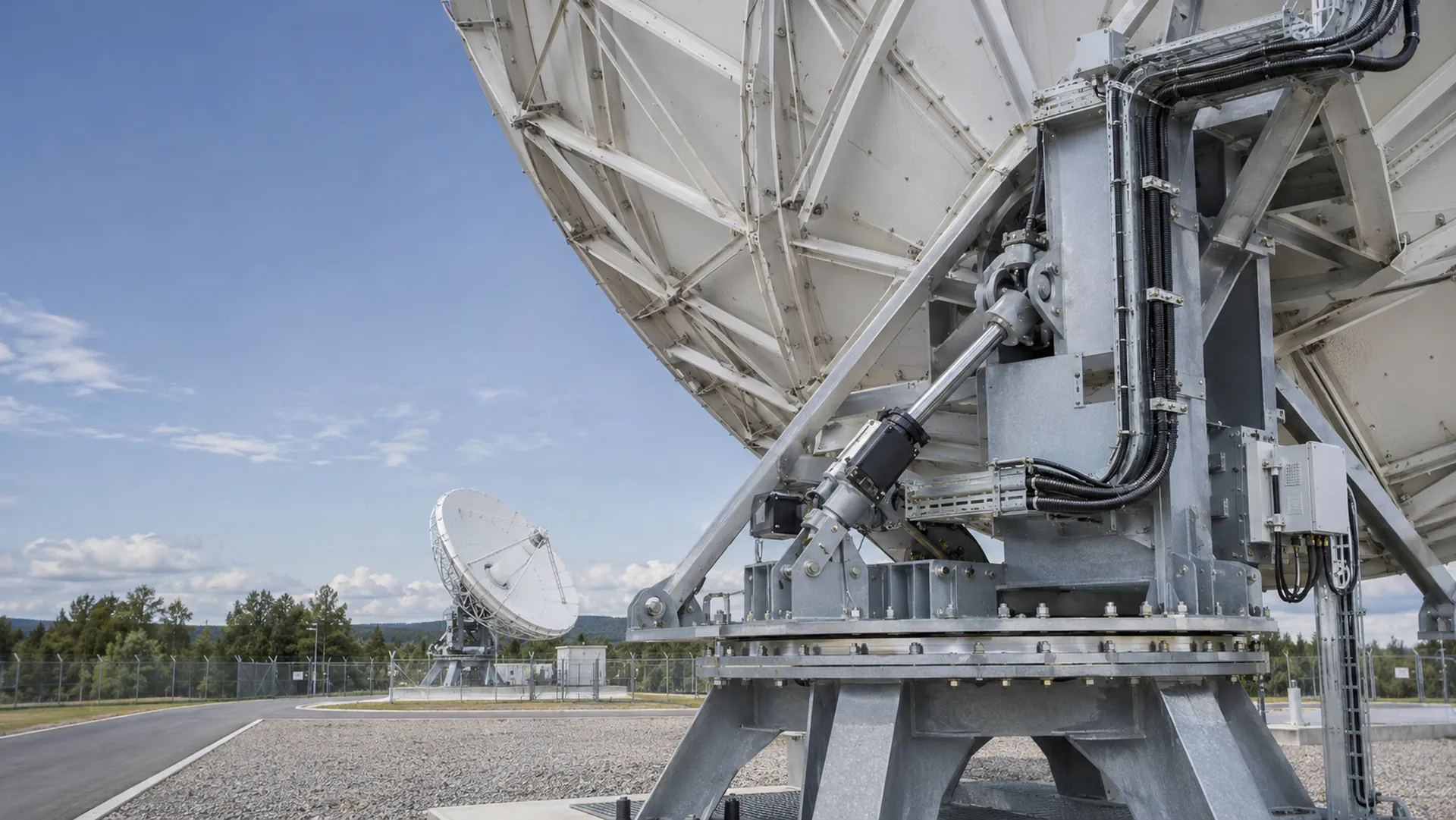
Technicians adjust antenna parameters remotely, reducing the need for site visits.
One dashboard
Every antenna on one screen, with its status and alerts.

From the client's system

These screens come from this project, in the Mosaic interface of the time.
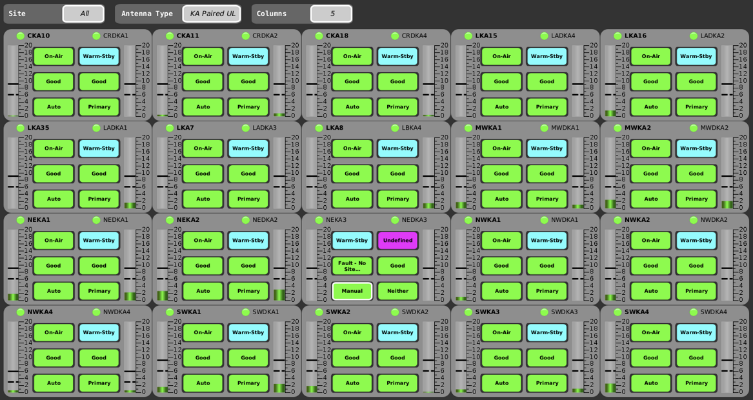
Grid of paired Ka band antennas, each showing on-air state, health, mode and fade level
Dashboard overview. The antennas on one screen, with status and alerts.
Site diversity panel comparing a primary and a diverse antenna, with fade levels and switching controls
Site diversity. Primary and diverse antennas side by side, with fade levels and switching.
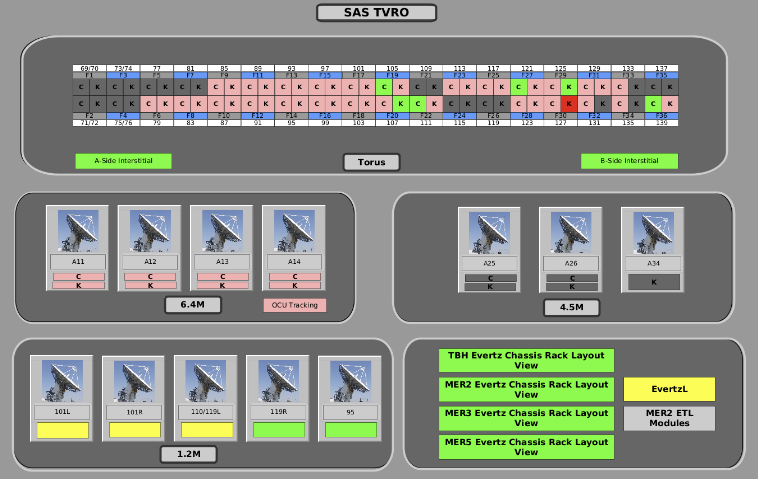
Overview of a torus antenna and two groups of dishes by size at one site
Antenna overview. A torus and dish groups at one site, arranged by size.
Uplink chain from modems through converters, amplifiers and diplexers to an antenna
Uplink chain. Each path from the modems to the antenna, with live state and power readings.
Remote control panel for attenuation, amplifier standby, transmit and RF settings
Remote control panel. Technicians adjust parameters and configuration without a site visit.

Eighty antennas. One view.

Fades, chains and controls for all 80 antennas, from one system.

80
Ka and Ku band antennas
1
Central control system

Outcomes

Reduced downtime
Fades and faults are seen as they happen, and maintenance is planned, so fewer outages come as a surprise.
Operational efficiency
Routine checks and settings changes no longer need a call or a trip, so technicians spend their time on faults.
Scalability
The client has integrated additional antennas and expanded its network.
Mosaic has revolutionized the way we manage our satellite communication infrastructure. The platform's advanced capabilities and user-friendly interface have significantly improved our operational efficiency and reduced downtime. We are extremely satisfied with the results and look forward to continuing our partnership with Mosaic.
Chief Technology Officer, client company

One Mosaic system now watches and controls all 80 antennas, and new antennas join the same system.