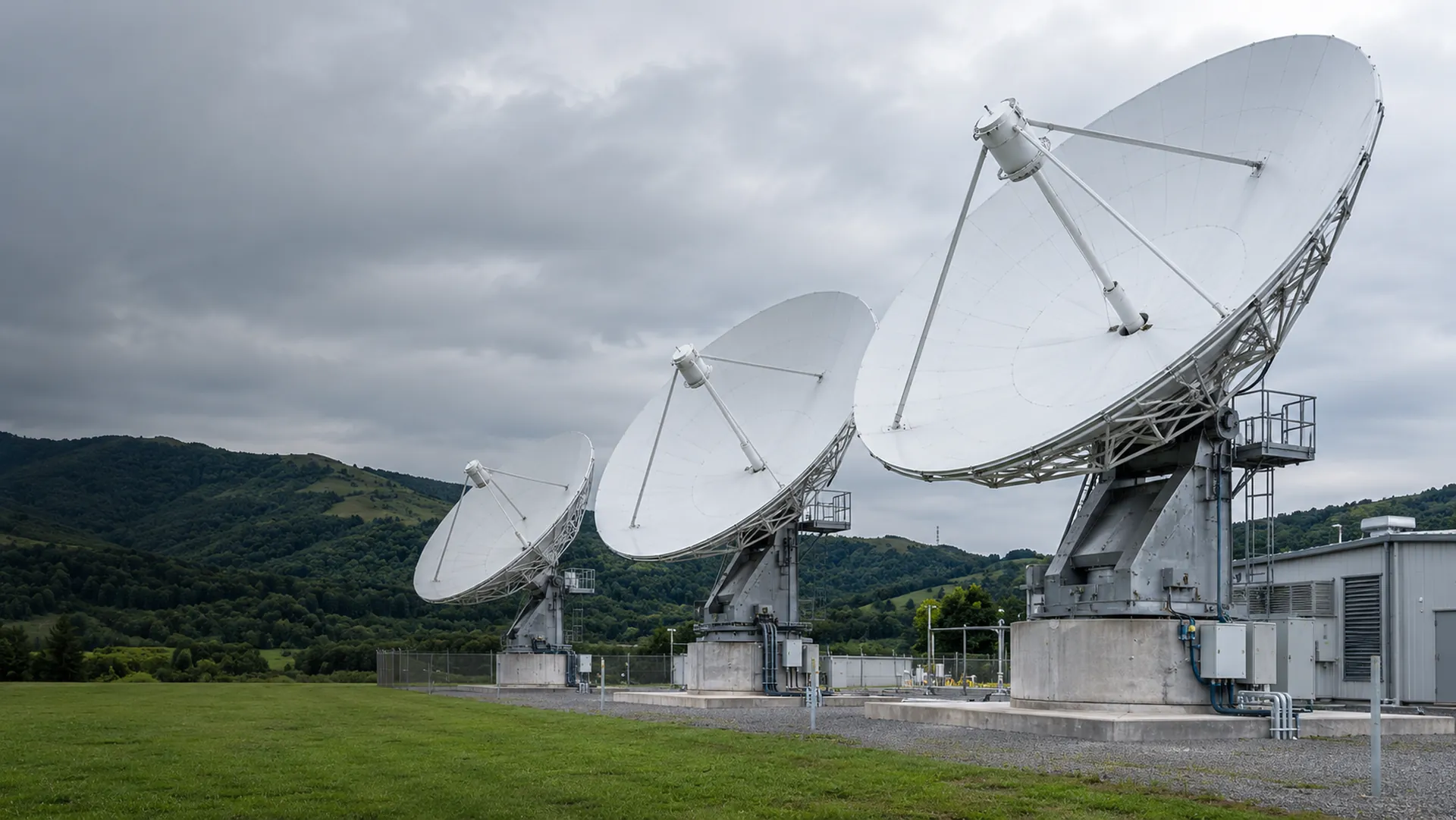
Satellite teleport monitoring and control
Antennas, RF chains and modems across every teleport, with link margin, rain fade response and failover on one screen.
Run ground stations from anywhere.
A teleport service depends on a chain of antennas, RF equipment and modulators, often across several sites. Watching each one on its own hides what a fault means for the service.
Central monitoring, control and automation give you one view of the global network, and failover that acts when a chain fails.
Antennas.Carriers.Teleports.
Teleport operations, end to end.
Watch every chain, act on the alarm and switch to standby, at one site or across all of them.
Equipment monitoring
Real-time monitoring of antennas, RF equipment, modulators and all teleport infrastructure, with alerting. A tripped amplifier shows in its chain, with traffic already on the standby.
Signal management
Signal quality monitoring, carrier tracking and automated switching for service delivery. C/N, BER and MER for each carrier, and link margin against your alert threshold.
Network orchestration
Automated resource allocation, bandwidth management and multi-site orchestration for global operations. Every teleport on one map, with the services running through each.
What you can do from one console.
The alarm, the readings behind it and the command that fixes it, on the same screen.
Service monitoring
- Signal quality metrics (C/N, BER, MER)
- Carrier identification and analysis
- Interference detection and mitigation
- Link margin against your alert threshold
- Service level monitoring and reporting
RF equipment control
- Antenna positioning and tracking, with wind warning and stow limits
- Uplink and downlink power control
- Modulator and demodulator management
- Frequency coordination
Automation and failover
- Automatic satellite tracking
- Rain fade response: uplink power control, then adaptive coding and modulation
- Redundancy switching, such as a tripped amplifier to its standby
- Redundant server pairs with automatic or operator-controlled failover
- Scheduled operations automation
- Emergency response procedures
Multi-site management
- Central control of multiple teleports
- Resource pooling and allocation
- Unified reporting across sites
- Global network map with the services running through each teleport
Who it serves.
Teleport operators use the same console for each of these services.
Broadcasting
TV and radio distribution, contribution feeds and backhaul services.
Enterprise
Corporate VSAT networks, remote site connectivity and backup links.
Government
Secure communications, defense networks and emergency services.
Telecommunications
Service provider networks, backhaul and mobile infrastructure.
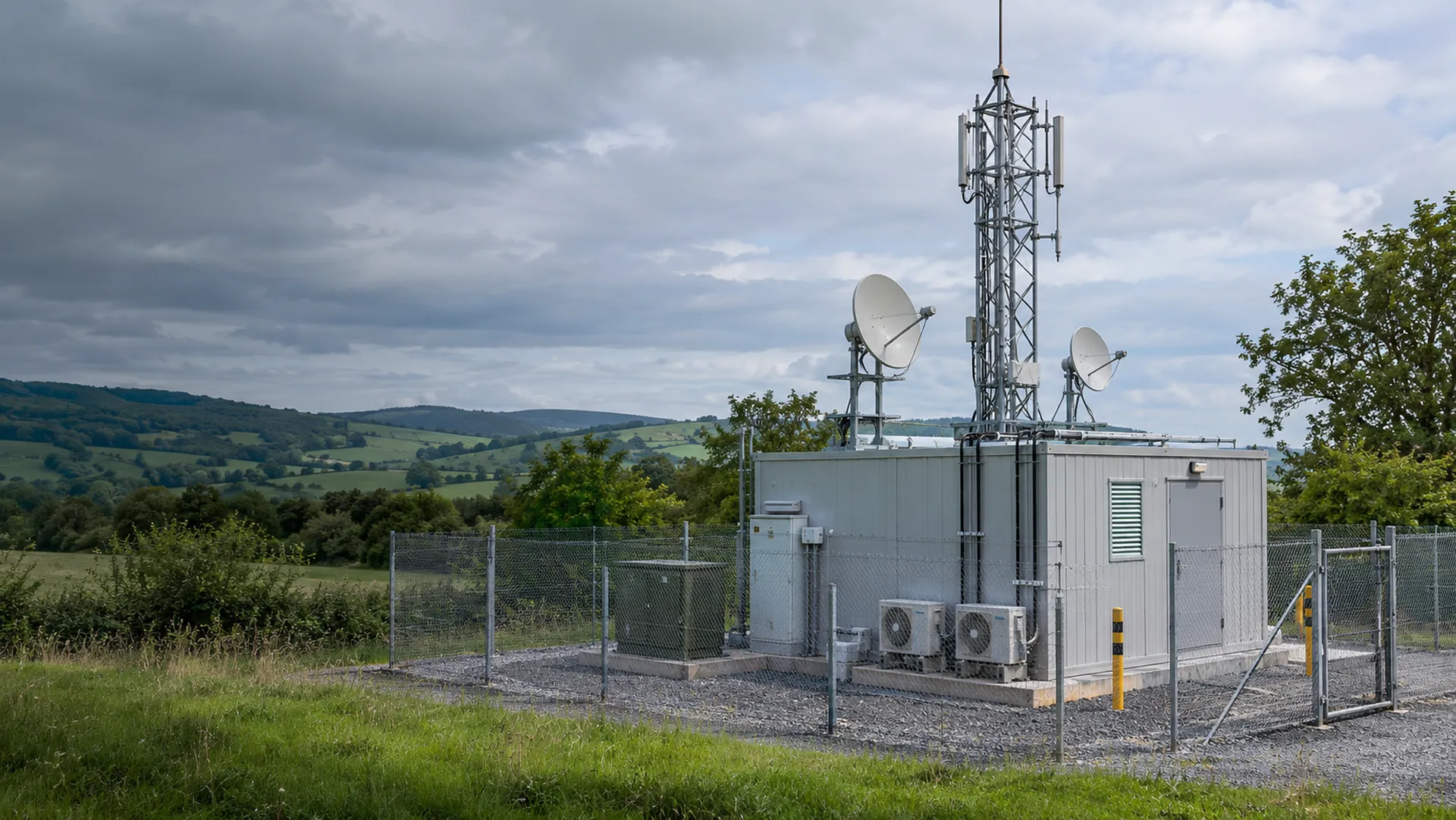
Three times the links, with the same team.
A satellite operator with 15 teleports streamlined its ground stations and kept service availability at 99.9%.
- 3x
- Capacity increase
- 99.9%
- Availability
- 15
- Teleports
Global Satellite Services
Case studies and success stories
What one operator built with Mosaic, with screens from the project.
View all case studiesSee 3 more screensAnomaly detection, RF chain, Link margin
Common questions
What signal metrics can I monitor?
Signal quality metrics including C/N, BER and MER, along with carrier identification and interference detection.
Can one team run several teleports?
Yes. You can control multiple teleports centrally, pool resources and see the global network in one view.
Does it handle failover?
Yes. Redundancy switching and failover can run automatically, along with scheduled operations and emergency procedures.
What you would use
- MosaicUnified monitoring and control of all teleport equipment and satellite links from anywhere.
- TesseraGround station equipment, satellites and transponders as records in a CMDB, with their changes and tickets.
- TapestryScheduled services: equipment booked by capability, set up before air and released afterward.